
What you are actually drinking
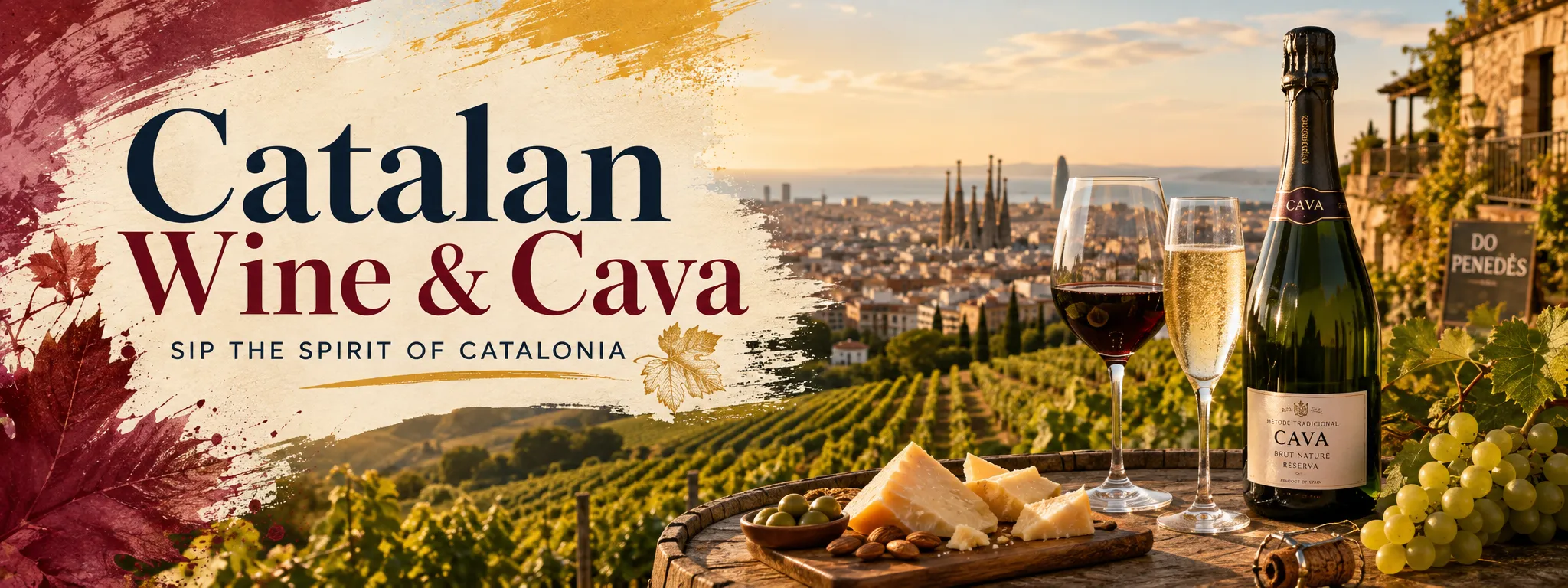
Barcelona is a city, not a wine region, but it sits close to several important Catalan wine landscapes. For visitors, the useful distinction is simple: cava is a protected sparkling-wine category made by the traditional method; Penedès is a nearby wine region with a long wine and cava tradition; and Priorat is a more distant, rugged region famous for concentrated still wines. You do not need to memorise appellation rules to order well, but knowing those three ideas stops a wine list from looking like a wall of unfamiliar names.
Cava first: style, not shorthand for any Catalan bubbles
Cava is made by a second fermentation in the bottle, the same broad method used for Champagne, but it has its own protected designation and production rules. Around Barcelona, it is commonly associated with the Penedès area and especially Sant Sadurní d'Anoia. Tourism of Barcelona's official Penedès guide notes the area's long sparkling-wine history and the importance of traditional local grapes including macabeo, xarel·lo and parellada. On a menu, ask whether the house sparkling wine is cava and whether the staff can suggest a drier or richer style.
Penedès is the easiest wine-country extension from Barcelona
Alt Penedès lies roughly 40 kilometres south-west of Barcelona and is one of the most practical wine-country day trips from the city. Tourism of Barcelona describes more than 300 wineries across the area, with many offering visits and tastings. Vilafranca del Penedès and Sant Sadurní d'Anoia are the two names most visitors encounter. If your priority is learning rather than drinking volume, choose one or two booked winery visits and leave time for lunch instead of trying to stack four tastings into a rushed day.
Priorat is a different proposition
Priorat sits farther from Barcelona and is better treated as a dedicated excursion than an add-on between city sights. Its steep, slate-rich landscape and powerful red wines make it distinct from the easier Penedès circuit. If you only have three or four days in Barcelona, explore Priorat through a serious wine bar in the city. If wine is one of the main reasons for your trip, an organised or self-planned full day can make sense.
How to order wine without pretending to be an expert
Tell the server what you actually want: sparkling or still, white or red, light or full-bodied, and roughly how much you want to spend. Ask for something Catalan if that matters to you. A good bar can usually translate those preferences into a useful suggestion. Ordering by the glass is ideal for comparison; a bottle makes more sense with a long meal or a group. If a label interests you, photograph it rather than trying to memorise a producer name after dinner.
Where to try Catalan wine in the city
Dedicated wine bars offer the widest choice, but traditional restaurants, vermut bars and contemporary Catalan dining rooms can all be useful. The best venue is not necessarily the one with the longest list. Look for staff who can explain what is available by the glass and why it suits your food. Around the Gothic Quarter, Born, Eixample, Gràcia and Poble-sec, you can fold a wine stop into an evening without making a special cross-city journey.
Pairing: keep it practical
Dry sparkling wine is flexible with salty snacks, fried dishes and many seafood plates. Fresh Catalan whites can work well with fish and lighter rice dishes. Fuller reds make more sense with grilled meats, stews and richer food. These are starting points, not rules. If you are eating tapas, the table may have several flavours at once, so versatility matters more than chasing a textbook pairing.
Planning a winery day
Book ahead, especially on weekends and around harvest. Check the winery's own transport instructions, visit language and accessibility information. A winery described by Catalonia's official tourism portal, for example, may offer timed guided visits and tastings rather than walk-in access. If nobody in your group wants to stay alcohol-free, public transport or a guided transfer is the safer choice. Do not assume rural wineries are close enough to walk between.
Buying bottles to take home
Wine shops in Barcelona make it easy to compare regions without leaving the city. Tell staff your luggage situation and destination; airline and customs rules vary. If you are travelling with hand luggage only, buying airside or arranging specialist shipping may be more practical than carrying bottles through security. Keep receipts if your destination has an alcohol allowance or value threshold.
The bottom line
For a first trip, start with cava and a few Catalan wines by the glass in Barcelona. If that sparks more interest, Penedès is the easiest dedicated wine-country day. Save Priorat for a trip where wine justifies the extra travel. The goal is not to tick off appellations; it is to understand what you like and connect the glass to the landscape around the city.