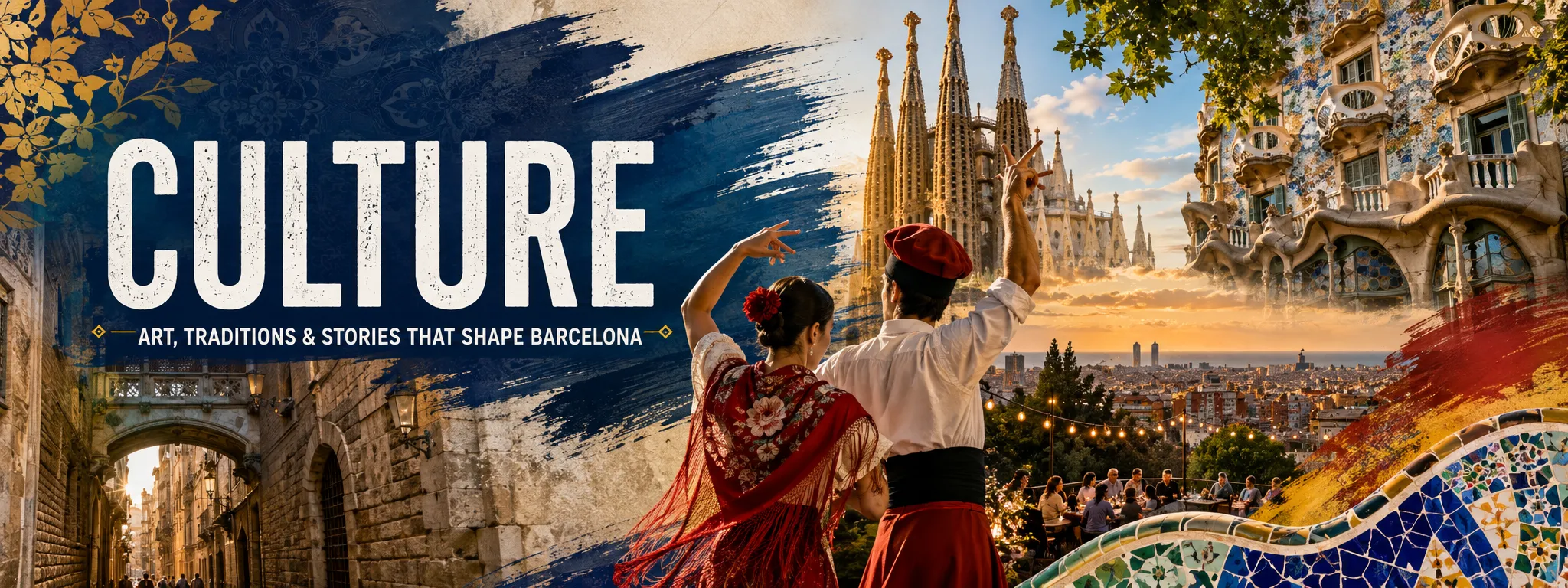
Modernisme, Roman and medieval Barcelona, Catalan language and identity, Picasso, festivals, football and the Civil War all overlap here. Pick a lens, then let it change the way you see the streets.

I use these guides to give context to things a visitor can already see: why the Eixample looks the way it does, why Modernisme spread so deeply, why Catalan appears beside Spanish, and why a football club can carry cultural meaning far beyond sport.
Start with the movement rather than one architect. It makes Sagrada Família, Passeig de Gràcia and dozens of smaller buildings part of the same urban story.
Read the Modernisme guide →Roman Barcino, medieval power, industrial expansion, conflict, dictatorship and democratic-era transformation in one chronological frame.
Follow the timeline →A practical introduction to Catalan and Spanish in daily life, local identity and the habits visitors are most likely to encounter.
Read the culture guide →La Mercè, neighbourhood festes majors and traditions make more sense when you understand that these are civic and community events, not staged tourist shows.
Explore the festival guide →His formative connection to the city and how that context changes a visit to the museum and old-city streets.
Read the guide → 🏛️ArchitectureDomènech i Montaner, Puig i Cadafalch and a movement that is far bigger than its most famous name.
Read the guide → ⚽Sport & identityWhy “more than a club” belongs in a cultural conversation as well as a football one.
Read the guide → 📜MemoryApproach surviving sites and memory spaces with historical context rather than turning difficult history into sightseeing trivia.
Read the guide → 🎭TraditionsA useful explainer for the dance, music and communal traditions you may encounter in public squares and festivals.
Read the guide → 🖼️CollectionsUse the museum comparison when you want to turn cultural interests into an actual half-day plan.
Compare museums →Barcelona's official Modernisme route encompasses work by Gaudí, Domènech i Montaner, Puig i Cadafalch and many others, spread across houses, hospitals, concert halls, shops and everyday urban details. I would use that broader lens before booking a second or third Gaudí interior. Sometimes a walk through the Eixample or a visit to the Palau de la Música Catalana tells you more about the movement than another famous façade alone.
The same principle works elsewhere. Picasso makes more sense beside the old-city places connected to his Barcelona years. The Civil War guide makes Montjuïc, bomb-shelter history and later urban memory more legible. FC Barcelona makes more sense when you see its identity language in the wider Catalan context rather than treating the club as a self-contained attraction.
Barcelona's culture is not frozen in museums. The official city calendar lists festivals, performances, exhibitions and neighbourhood events throughout the year, while La Mercè remains the city's major annual festa. I check the Barcelona City Council events guide close to travel dates instead of pretending a hub page can stay current on temporary programming.
If you encounter a religious procession, correfoc, sardana gathering or neighbourhood festa, remember that local participation comes first. Watch, ask before intruding with close-up photography, and follow barriers or safety instructions. The useful traveller question is not “what content can I get from this?” but “what is happening here, and how do I join or observe respectfully?”
For a compact official overview of the city's cultural offer, the Tourism of Barcelona culture guide is a good current cross-check.
Cheers, Carpe Diem & reading the city as well as photographing it! 🍻⏳🎭
TATS Man
your context-before-selfie culture tragic