What the sardana actually is
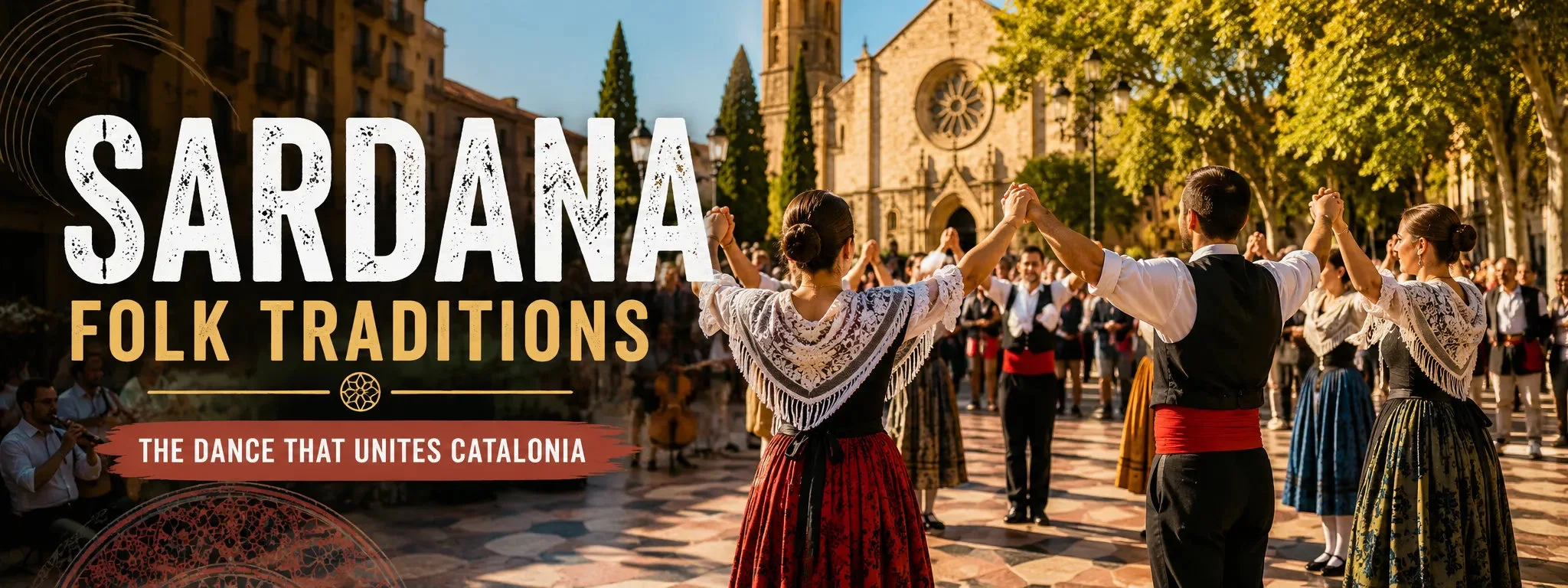
The sardana is a Catalan circle dance in which dancers join hands and work through measured short and long steps to music played by a cobla. It can look restrained compared with a stage dance, but that is part of the point: the circle, the shared timing and the music matter as much as individual display.
The sound of the cobla
A sardana is inseparable from its ensemble. The cobla uses distinctive wind instruments, including the bright, penetrating tenora, alongside brass, double bass and the small flabiol and drum. Catalonia’s cultural-heritage service credits 19th-century musician Pep Ventura with modernising the sardana and introducing the tenora into the ensemble.
A tradition that changed over time
It is safer to think of the modern sardana as a 19th-century tradition than as an unchanged ancient dance. Official Catalan heritage material links its modern form to earlier dance traditions and to the contrapàs, while describing the 19th century as the key period of modernisation and popularisation. In the 20th century the dance became strongly associated with Catalan identity.
Where visitors may see sardanes
Barcelona hosts public sardana gatherings, especially around traditional festivals and cultural programmes, and the Cathedral area has a long association with public dancing. Do not rely on a decades-old “every Saturday/Sunday” timetable: performances can move, pause or change seasonally. Check current listings from the city, cultural organisers or the event itself.
Can visitors join the circle?
Often, yes — but watch first. Some gatherings are informal and welcoming; others involve experienced groups working through a particular piece. Join only when there is space and the atmosphere clearly invites it. Move gently, keep the circle’s shape and do not treat dancers as a photo prop. If you are unsure, ask someone at the edge.
Castellers: a different tradition
Castells, the human towers seen at many Catalan festivals, are not part of the sardana. They are built by organised teams called colles, with a dense base supporting successive levels. For visitors the important rule is simple: give the team room, respect steward instructions and never push into the working area for a better photo.
Gegants, capgrossos and processions
Gegants are giant figures carried through streets in festival processions; capgrossos are oversized-headed characters. You may also encounter ball de bastons stick dancers, drumming groups, beasts and dragons used in fire traditions. These elements vary by neighbourhood and festival, which is why local festa major programmes are so rewarding.
Correfoc and fire traditions
A correfoc puts participants close to sparks, firecrackers, drums and costumed devils. Watch from farther back if you are sensitive to noise or smoke. If you enter the active zone, follow the organiser’s clothing and safety guidance; this is one tradition where “stand anywhere and film” is a poor strategy.
Good visitor etiquette
Popular culture in Barcelona is community culture. Let processions pass, keep children out of working zones, do not touch costumes or instruments, and avoid blocking residents’ doors during neighbourhood events. Photography is normally part of public festivities, but courtesy still matters.
Learn more from Catalan heritage sources
The Government of Catalonia’s sardana collection explains the dance, cobla and modern history. For a broader festival context, Barcelona Tourism covers recurring city traditions and feast days.