
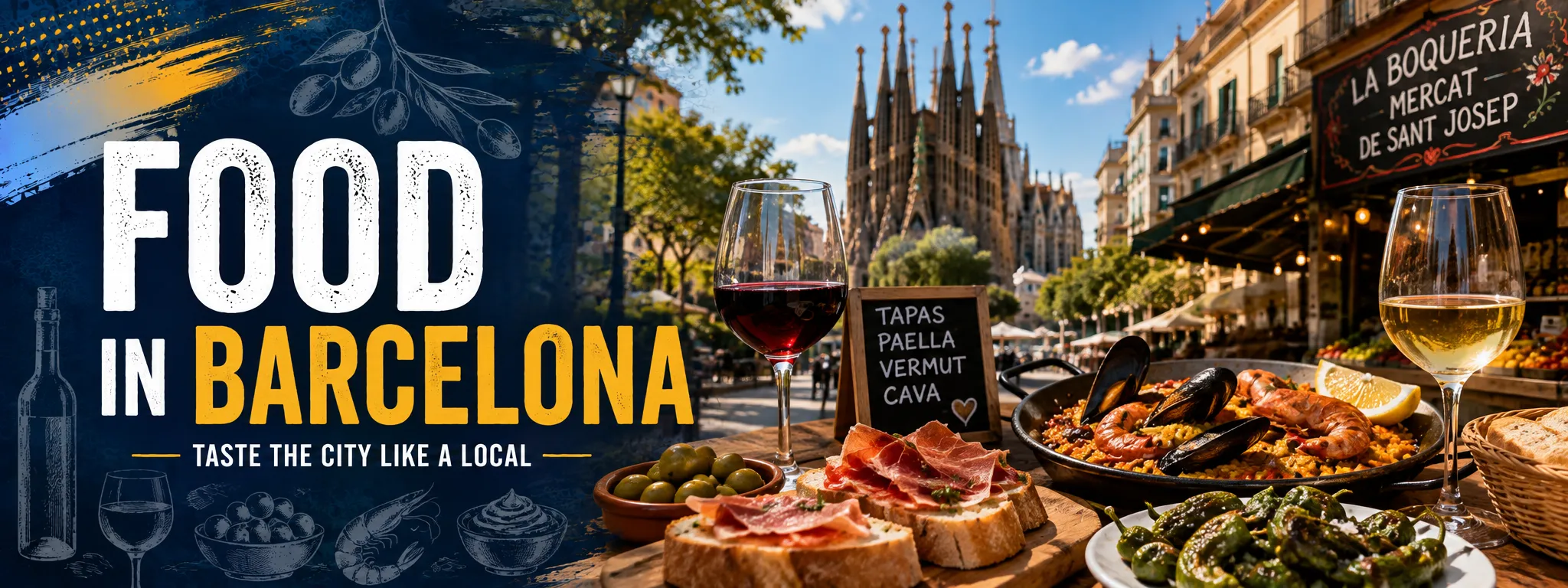
Markets, Catalan dishes, tapas, vermut, coffee, wine and serious restaurants make more sense when you understand how they fit into the day — not when you chase one viral venue after another.
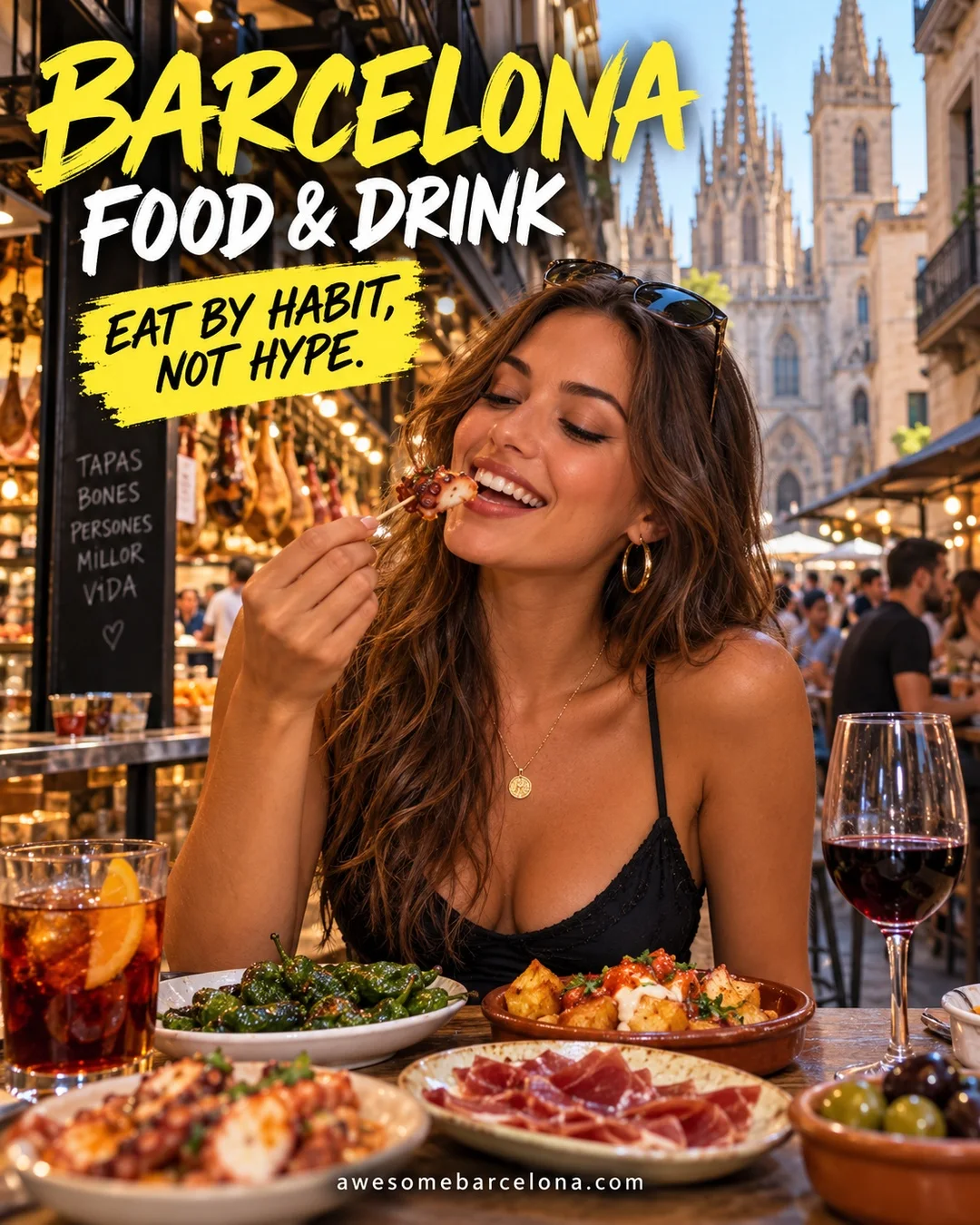
I would learn three things first: what Catalan food tends to value, how municipal markets fit into neighbourhood life, and when tapas, vermut, a long lunch or a tasting menu actually suits your day.
Catalan cooking is strongly tied to season, produce and territory, with seafood, vegetables, rice, meat, pulses, preserved foods and sweets all showing up in different combinations. Barcelona then adds a huge restaurant range, international communities and contemporary cooking on top. That is why a single “must-eat” checklist is less useful than knowing which kind of meal you want.
The city's market network matters too. La Boqueria is the famous one, but Barcelona's municipal food markets are spread across the city and often work better as a window into a neighbourhood. The official tourism board describes markets as part of the city's everyday food culture, not merely attractions.
Learn how to order, share and pace the meal before worrying about a supposedly definitive tapas bar.
Read the tapas guide →Worth seeing, but easier to enjoy when you understand its visitor pressure and do not mistake it for Barcelona's only market.
Plan a Boqueria visit →Compare Sant Antoni and other district markets when you want fresh-food culture with less famous-name gravity.
Explore the market network →Think of vermut as a social ritual around the late morning or pre-lunch window, not simply a drink to tick off.
Read the vermut guide →Start with local breakfast habits, then choose between simple café fuel and the city's newer specialty-coffee scene.
Read the guide → 🥘RiceHow to think about quality, timing and location without falling for a laminated-menu promise beside every landmark.
Read the guide → 🍷WineUse Barcelona as the gateway to Penedès, cava and other Catalan wine regions rather than treating the list as jargon.
Read the guide → ⭐Occasion mealFor a meal that is part of the trip itself: compare style, location, accessibility and booking commitment before price.
Read the guide → 🌱DietaryTraditional menus can require more interpretation than modern plant-based venues, so plan the language and dishes as well as the restaurant.
Read the guide → 🍮SweetCrema catalana, xuixo and seasonal sweets make more sense with the traditions that put them on the counter.
Read the guide →I would rather build food into the route than cross Barcelona three times for individual venues. Have breakfast near the first neighbourhood, use a market or casual lunch where the sightseeing day naturally lands, leave the afternoon open, then make dinner the one meal you travel for if it is genuinely special.
That makes neighbourhood choice do some of the work. Old-city days naturally connect to markets and tapas; Eixample gives you enormous restaurant density; Gràcia and Sant Antoni are useful when you want the meal to feel part of a residential district rather than a tourist corridor. Our neighbourhood guide is the better place to decide the geography.
For current restaurant awards, events and food-and-wine programmes, I check the official Tourism of Barcelona food-and-wine information rather than freezing a fast-changing venue list into a hub page.
A giant menu promising every Spanish classic beside a major attraction tells you less than a short menu that fits the kitchen and season.
Meal rhythms differ. Check the actual kitchen hours when a booking matters instead of assuming a restaurant will serve your preferred meal at any time.
Preference and allergy are not the same. For a serious allergy, communicate clearly and confirm ingredients and cross-contact directly with the venue.
Cheers, Carpe Diem & picking the market before the viral reel! 🍻⏳🍽️
TATS Man
your menu-reading Barcelona glutton