
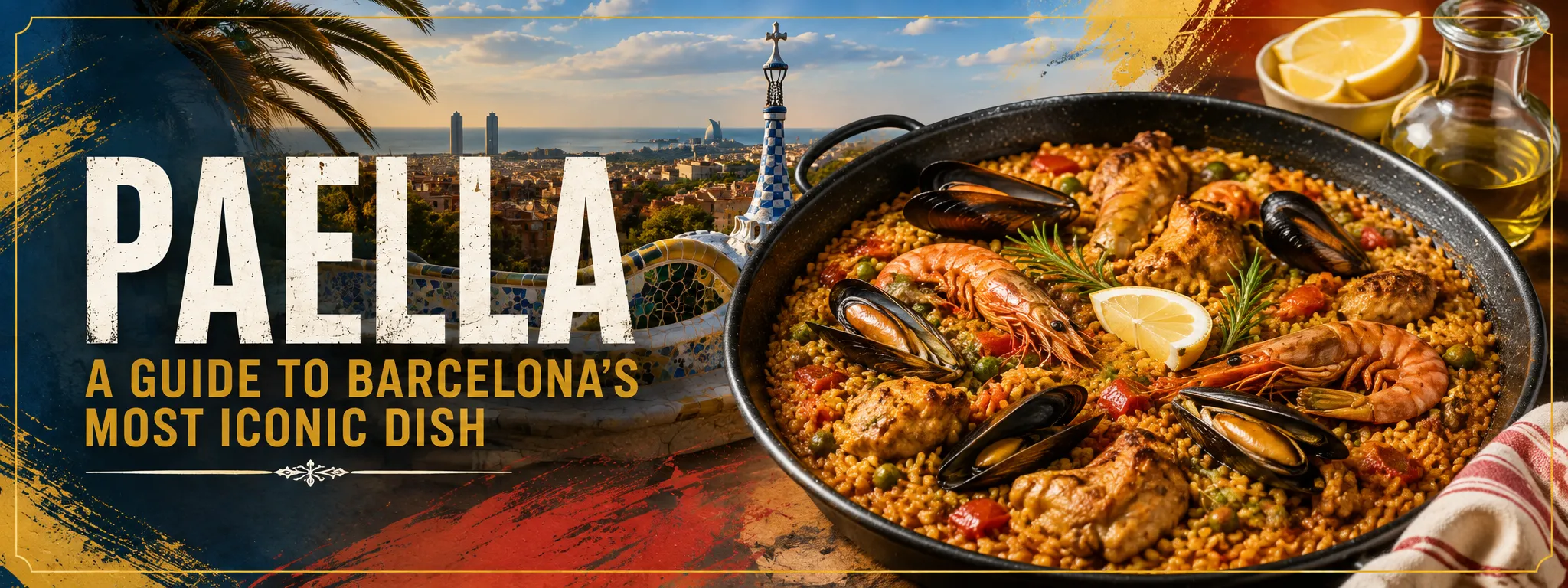
Start with the useful truth
Paella was born in Valencia, not Barcelona. That matters because the city has no shortage of restaurants selling a generic tourist version, but it does not mean you should skip rice dishes here. Barcelona has a strong Mediterranean seafood culture, and both paella and fideuà have long been absorbed into restaurant cooking across Catalonia. The practical goal is not to hunt for a mythical “most authentic Barcelona paella”; it is to choose a kitchen that treats rice, stock and seafood seriously.
How to judge a promising rice restaurant
Look for a short, coherent menu and a kitchen that gives rice dishes their own section instead of offering every Spanish cliché at once. A place that also cooks Catalan seafood, grilled fish, suquet or seasonal market dishes is usually a better bet than a doorway covered with giant photos. Check recent reviews for comments about the rice itself rather than only the view or service.
- Ask whether the rice is cooked to order. Good kitchens will tell you the expected wait.
- Read the pan description. Seafood, black rice, vegetable rice and mixed versions are different dishes, not interchangeable toppings.
- Do not obsess over the word paella. Arròs simply means rice, and a good Catalan-style rice dish may be the smarter order.
Where in Barcelona makes sense
Barceloneta and the old waterfront are obvious places to look because fish and seafood are part of the neighbourhood’s identity, but a sea view is not a quality guarantee. Walk a street or two back from the promenade and compare menus. You will also find serious rice cooking elsewhere in Ciutat Vella, Eixample and neighbourhood restaurants away from the beach.
Do not assume “locals inside” is a foolproof test. Barcelona is an international city and popular restaurants attract everyone. Menu focus, cooking time, recent feedback and the restaurant’s broader food identity are more useful signals.
Fideuà and other alternatives
Fideuà uses short noodles in a paella-style pan and is closely associated with the Valencian coast, but it is now common in Catalan seafood cooking too. Barcelona Tourism explicitly describes both paella and fideuà as Valencian in origin but assimilated into Catalan gastronomic culture. If you want something more specifically Catalan, consider suquet de peix, grilled seasonal fish, esqueixada, or a rice dish built around local seafood.
How ordering usually works
Many rice dishes are priced or portioned for two or more diners. That is normal for pan cooking, but policies vary, so ask before sitting down if you are solo. A restaurant may offer an individual rice at lunch, a daily rice special, or another seafood dish that suits one person better. If you have allergies, ask specifically about shellfish, fish stock and cross-contact rather than assuming a vegetable-looking rice is seafood-free.
What about socarrat?
Socarrat is the toasted layer that can form where rice meets the pan. It can add concentrated flavour and texture, but it is not a magic certificate of quality. The rice should still be properly cooked and taste of a good stock; a burnt base does not rescue a weak dish.
Timing your meal
Lunch is the easiest moment to make a rice meal the centrepiece of the day. Avoid squeezing it between timed attractions. If you have a Sagrada Família, Park Güell or museum booking, eat afterwards or allow a generous buffer. At busy restaurants, reserve when possible and confirm the kitchen’s final ordering time for rice dishes.
Red flags worth taking seriously
Be cautious with aggressive street touts, menus that promise dozens of unrelated cuisines, or claims that a pan can appear almost instantly. Frozen seafood is not automatically bad and a multilingual menu is not automatically touristy; the stronger warning is a restaurant whose entire sales pitch is convenience rather than cooking.
Useful official context
For a broader picture of the city’s food culture, see Barcelona Tourism’s gastronomy overview, which places rice, paella, fideuà, Catalan dishes and regional wine in context.