
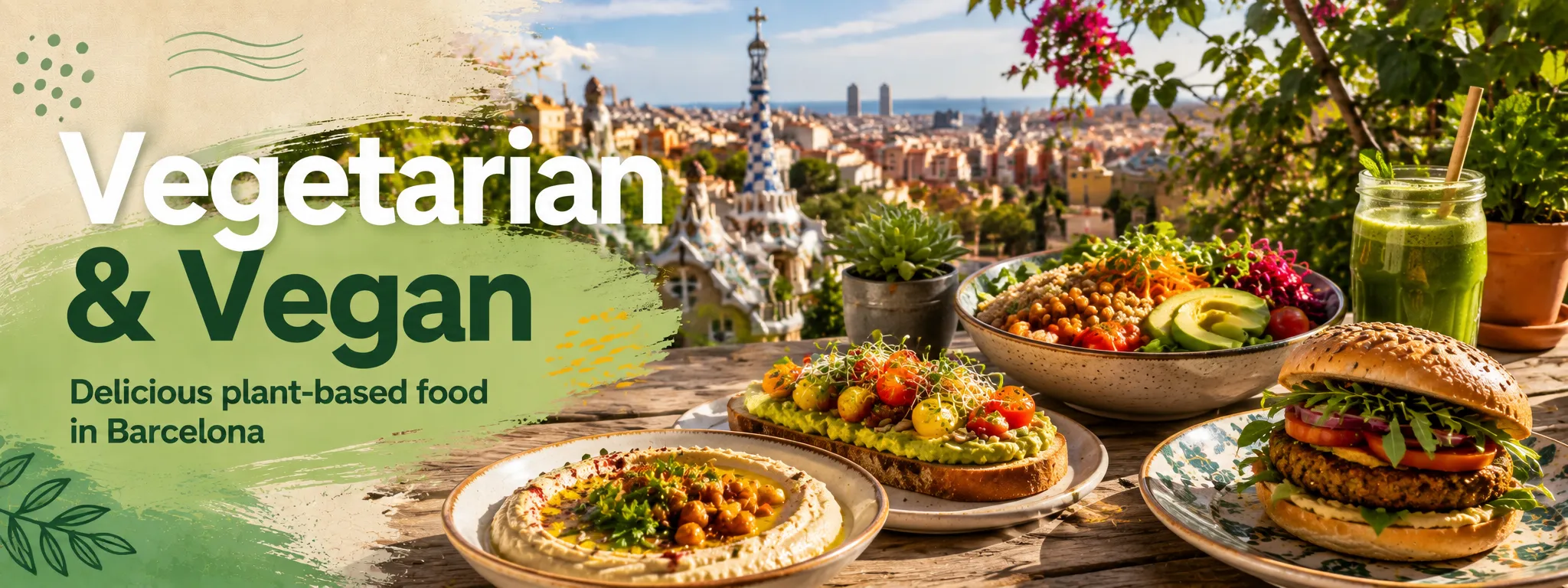
Barcelona is easy for vegetarians — and increasingly easy for vegans
You do not need to survive on patatas bravas. Barcelona has a large dedicated vegetarian and vegan restaurant scene, but the more useful skill is learning how to eat well across ordinary Catalan and Spanish restaurants too. Vegetable dishes, pulses, mushrooms, grilled produce, bread with tomato and market cooking can give you excellent meals if you know what to ask.
The catch is that “vegetable” does not always mean vegetarian. Traditional dishes may use ham, tuna, anchovy, meat stock or fish-based seasoning without those ingredients dominating the menu description. Vegans need to be especially clear about egg, dairy and mayonnaise.
Useful words: vegetarian, vegan and the questions that actually help
- Vegetarià / vegetariana in Catalan; vegetariano / vegetariana in Spanish.
- Vegà / vegana in Catalan; vegano / vegana in Spanish.
- Sense carn ni peix / sin carne ni pescado: without meat or fish.
- Sense ou ni làctics / sin huevo ni lácteos: without egg or dairy.
- Porta brou de carn? / ¿Lleva caldo de carne?: does it contain meat stock?
You do not need perfect pronunciation. A short, specific sentence plus a translation card is more reliable than saying “I'm vegan” and assuming every kitchen interprets the term identically.
The easiest traditional foods to look for
Pa amb tomàquet — bread rubbed with tomato and usually dressed with olive oil and salt — is one of the simplest Catalan staples and normally vegan, though check if a prepared version comes with toppings. Escalivada is roasted pepper, aubergine and onion, often excellent on bread; anchovies can be added in some presentations, so ask.
Seasonal grilled vegetables, mushrooms, salads and pulses can also work well. Mongetes (beans) are common in Catalan cooking, but traditional preparations may pair them with sausage or pork. The vegetable is not the problem; the stock, garnish or cooking method can be.
Tapas: build a meal instead of searching for one “vegan main”
A tapas meal is flexible because you can combine several small dishes. Typical options that may be vegetarian or vegan include patatas bravas, pimientos de Padrón, olives, grilled mushrooms, artichokes, tomato bread and some vegetable salads. But recipes are not standardised.
Bravas sauce may contain mayonnaise or aioli; croquettes nearly always contain dairy and often meat; ensaladilla rusa usually contains mayonnaise and often tuna; tortilla española contains egg. Ask rather than guessing from appearance.
Patatas bravas are vegetarian more often than vegan
The potatoes themselves are straightforward, but the sauces are where vegan travellers get caught. Some bars serve a tomato/chilli-style brava sauce alone; others add aioli or mayonnaise-based sauce. If vegan, ask for the sauces separately or confirm the ingredients.
This is a good example of why menu icons help but do not replace a conversation when dietary restrictions are strict.
Paella and rice dishes: vegetables on top do not tell you the stock
Vegetable paella or arroz de verduras can be an excellent meal, but verify that the rice is cooked in vegetable stock. A kitchen may use a common seafood or meat base even when the visible ingredients are vegetables.
For vegans, also ask about butter or dairy only if relevant to the particular restaurant; olive oil is common in Spanish cooking, but there is no reason to assume every recipe follows the same tradition.
Dedicated vegan restaurants: when they are worth seeking out
A fully vegan restaurant removes the need to interrogate every sauce and can be a welcome break after several mixed-menu meals. Barcelona has enough plant-based restaurants that you can choose by cuisine rather than accepting a generic bowl-and-smoothie menu.
Restaurant turnover is real, however. A static “top 10 vegan restaurants” list ages badly. Use current map/review tools and the restaurant's own website or social account on the day, then use this guide for neighbourhood and menu strategy.
Best neighbourhoods for plant-based choice
Eixample has the broadest spread of contemporary restaurants and is easy for mixed dietary groups. Gràcia has many small independent cafés and plant-focused venues. Sant Antoni and the Raval offer diverse international food as well as modern vegetarian options. Poblenou is useful if you are staying near the beach and want something beyond seafront tourist menus.
The Gothic Quarter and La Rambla area also have vegetarian choices, but location alone should not persuade you to eat at the nearest picture-menu restaurant. Walk a few streets away from the heaviest visitor flow.
Markets: excellent for ingredients, not automatically easy prepared meals
Markets such as Santa Caterina, Sant Antoni and La Boqueria are useful for fruit, nuts, bread, olives, fresh produce and picnic supplies. Market bars can also cook excellent vegetables. But traditional market cooking often centres on seafood, meat and eggs, so do not assume every colourful produce stall translates into a large vegan lunch selection.
If you are self-catering, markets become far more valuable. Barcelona's neighbourhood markets are one of the best ways to build a simple meal without relying on imported “health food”.
Breakfast is easier than it looks
A simple local breakfast can be tomato bread, fruit and coffee. Cafés increasingly offer plant milks, though availability is not universal in traditional bars. Toast with tomato and olive oil is an easy vegan order if the bread itself meets your needs.
For vegetarians, pastries, tortilla and cheese widen the options considerably. Vegans should ask about butter, egg and lard in baked goods rather than assuming a pastry is plant-based because it has no visible filling.
Coffee and plant milk
Specialty coffee shops routinely offer oat or other plant milks; traditional neighbourhood cafés may offer only dairy. If plant milk matters, search by current café menu rather than walking into every bar expecting the same choice.
Spanish and Catalan coffee terminology is less important than the milk question. An espresso or café solo is straightforward; a cortado or café con leche needs the milk substituted.
Menu del día: good value, but ask before sitting down
The weekday set lunch can be one of Barcelona's best-value meals. A vegetarian can often mix and match a vegetable first course with a vegetarian second, but vegan combinations are less guaranteed. Ask whether a vegan set is possible before you commit to the table.
A restaurant may happily adapt side dishes, while another may have only salad and chips. Being clear at the door avoids awkward negotiation after drinks arrive.
Mixed groups: pick cuisines that naturally offer choice
Groups with vegans, vegetarians and omnivores often do better at Mediterranean, Middle Eastern, Indian, Ethiopian, East Asian or modern Catalan restaurants with clearly marked menus than at a traditional meat-focused specialist. Barcelona's international food scene is strong enough that nobody needs to “take one for the team”.
Check whether “vegan option available” means one modified dish or a genuinely varied choice. For a special dinner, call or message ahead.
Allergies are different from preferences
A vegan label tells you nothing about gluten, nuts, sesame or other allergens. European food businesses have allergen-information obligations, but cross-contact risk depends on the kitchen. If an allergy is medically significant, communicate the allergen specifically and ask whether the kitchen can safely accommodate it.
Do not use “vegan” as shorthand for a milk allergy: a vegan dish may be prepared on shared equipment or alongside dairy. Likewise, gluten-free and vegan are entirely separate requirements.
Cheese, eggs and fish: clarify what “vegetarian” means for you
Most restaurants understand vegetarian to exclude meat and fish, but confusion happens, particularly with anchovies, tuna and stocks in dishes that are culturally perceived as “light” or vegetable-based. If you do not eat fish, say so explicitly.
For vegans, mention egg and dairy as well. A phrase card listing what you do not eat is more useful than a long explanation of philosophy in a busy kitchen.
Picnics and self-catering
Barcelona is excellent for a simple plant-based picnic: good bread, tomatoes, fruit, olives, nuts, hummus, prepared salads and local produce are easy to find. Supermarkets generally stock plant milks, tofu and meat alternatives as well, especially in larger branches.
Remember that alcohol rules and picnic etiquette vary by public space, and beaches/parks are not a licence to leave rubbish. Use bins and avoid glass where prohibited.
What to eat if you want something distinctly Catalan
Look for escalivada, calçots in season (with sauce ingredients checked), artichokes, mushrooms, beans, tomato bread and vegetable rice dishes. Seasonal produce is a better route into Catalan food than hunting for a vegan imitation of every meat classic.
Catalan cuisine is not historically vegan, but its emphasis on olive oil, vegetables, pulses and market ingredients gives a good kitchen plenty to work with.
Late dining and emergency food
Barcelona dinner hours can be later than some visitors expect. Dedicated plant-based kitchens may also keep different days off from mainstream tourist restaurants. Check hours before crossing the city for one venue.
Keep a backup option near your accommodation — a supermarket, falafel shop, Asian restaurant or café with a clearly marked plant dish — so a delayed attraction does not turn dietary planning into a crisis.
A one-day vegetarian/vegan food strategy
Start with tomato toast and coffee, use a neighbourhood market for fruit or snacks, have a proper set lunch at a restaurant with several clearly identified plant dishes, and save a dedicated vegan or vegetarian venue for dinner. This gives you both local food culture and a meal where you can order freely.
If you are staying several days, rotate neighbourhoods and cuisines rather than eating at the same plant-based chain simply because it feels safe.