
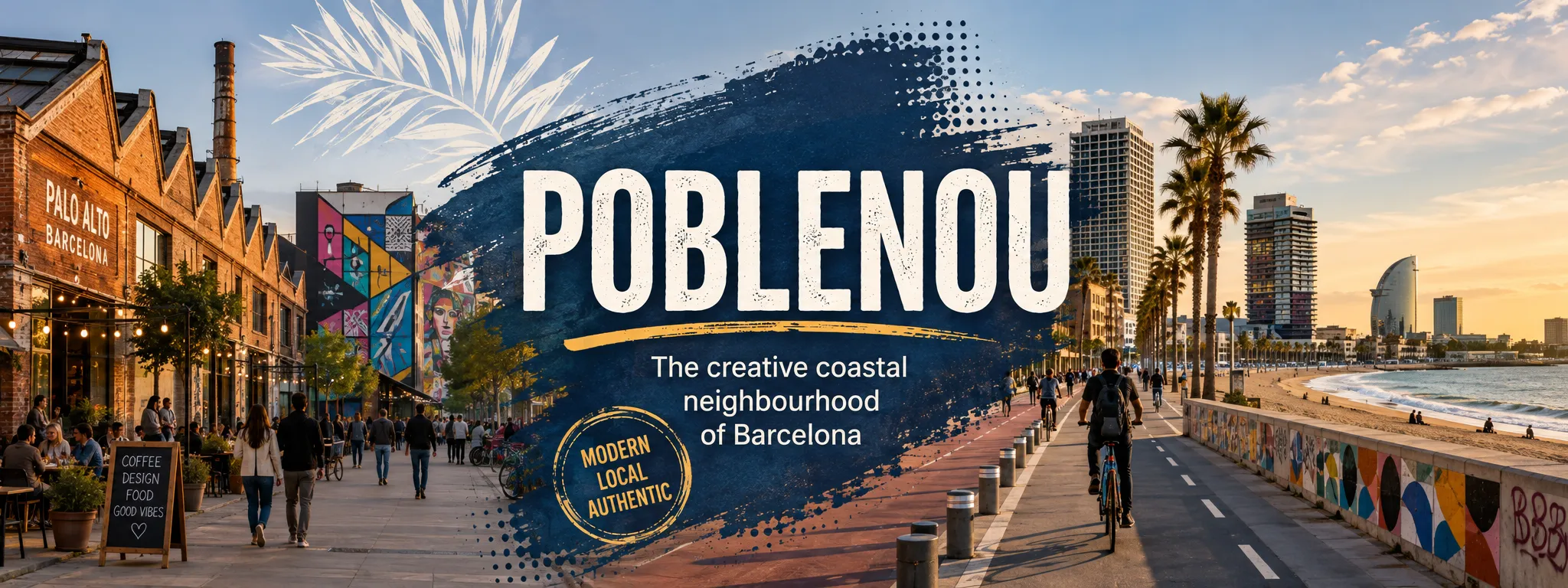
Why Poblenou feels different
Poblenou sits in Sant Martí between Barcelona's industrial past and its modern innovation district. Around the Rambla del Poblenou, the neighbourhood still feels residential and human-scaled; a few blocks away, converted factories, offices, studios and newer apartment buildings tell the story of 22@ regeneration. The sea is close, but this is not simply a beach district.
Tourism of Barcelona describes the old core around Taulat and Plaça de Prim as a place where traces of the working and industrial neighbourhood remain visible. That contrast is the reason to visit: Poblenou works best when you walk rather than race between isolated sights.
Start with Rambla del Poblenou
The Rambla is the neighbourhood's easiest spine for a first visit. Walk it slowly, stop for coffee or lunch, then peel off into side streets rather than treating it as a direct route to the beach. Plaça de Prim and the older streets toward the sea give a better sense of historic Poblenou than the larger avenues farther west.
Industrial heritage and 22@
Poblenou was once heavily industrialised and became known as the “Catalan Manchester”. Factory closures later left large sites available for redevelopment. The 22@ transformation brought technology, design, education and creative uses into former industrial land, but the old fabric has not disappeared completely.
Look for chimneys, brick façades and reused industrial buildings rather than expecting a single heritage attraction. The most interesting streets often mix old workshops, new offices and ordinary homes within a few hundred metres.
Beach access: Bogatell and Mar Bella
Poblenou is convenient for the Bogatell and Mar Bella stretches of Barcelona's waterfront. They generally feel less tied to the old-city sightseeing circuit than Barceloneta, though summer weekends can still be busy. Beach services, water conditions and lifeguard coverage vary by season, so check current city beach information before swimming.
Should you stay in Poblenou?
Poblenou suits travellers who want a calmer base, easy beach access and a more residential evening atmosphere while still being connected to central Barcelona. It can be especially appealing for repeat visitors, families and people working remotely for part of a trip.
The trade-off is location. Depending on your exact hotel or apartment, the Gothic Quarter, Montjuïc and some major Gaudí sights are not walk-out-the-door attractions. Check the nearest metro or tram stop and the late-evening journey you will actually make, not just the neighbourhood name on a booking map.
Getting there and getting around
Metro and tram coverage varies across the wider Poblenou/Diagonal Mar area. Llacuna and Poblenou stations on Metro L4 are useful for much of the traditional neighbourhood, while other stops can make more sense farther east or north. Use TMB's live journey planner for your exact starting point because one “Poblenou” address can be several blocks from another.
The area is flat and generally comfortable for walking. Cycling is common, but visitors should respect cycle lanes and pedestrian space rather than treating wide pavements as shared by default.
Eating and drinking
The Rambla and surrounding streets have plenty of cafés, bakeries, bars and restaurants. You do not need a famous venue to eat well here. For breakfast, a local bar or bakery is often more useful than crossing town; for dinner, wandering a block or two off the busiest strip can reveal a more neighbourhood feel.
Poblenou versus Diagonal Mar
Travel sites often bundle Poblenou and Diagonal Mar together, but they do not feel identical. Traditional Poblenou has older streets, neighbourhood squares and industrial layers. Diagonal Mar is newer, larger-scale and more closely associated with modern residential development, shopping and the eastern waterfront. Decide which atmosphere you want before booking accommodation.
A simple half-day route
Begin around the older Poblenou core, walk Rambla del Poblenou toward the sea, detour through side streets around Plaça de Prim, then continue to the waterfront. If industrial architecture is your priority, add a loop inland through the 22@ area before the beach. This route is intentionally flexible: the neighbourhood rewards small discoveries more than a rigid attraction checklist.
Official context
Tourism of Barcelona's Poblenou overview provides useful historical context. For transport and beaches, check current TMB and Barcelona city information close to travel dates.