
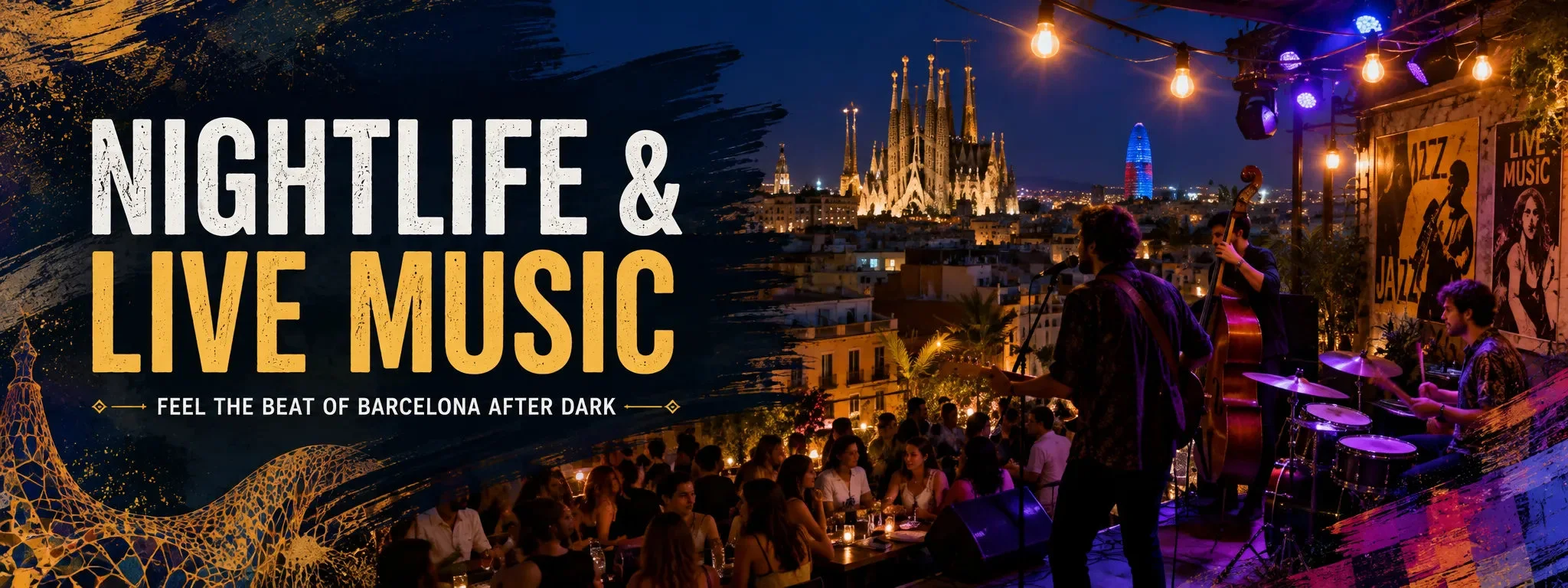
How Barcelona nights actually work
Barcelona nightlife starts later than many visitors expect. Dinner can run into late evening, bars build gradually and clubs may not feel busy until well after midnight. You do not need to follow that timetable: a live-music set, vermut bar or neighbourhood cocktail bar can make a better night than forcing yourself into a 3am club.
Choose the area before the venue
El Born works well for compact bar-hopping and a mixed visitor/local crowd. Gothic Quarter is convenient but more tourist-heavy, so judge individual bars rather than following promoters. Gràcia feels more neighbourhood-based and is good for squares, bars and a less club-focused evening. Poble-sec combines tapas streets and music venues. Poblenou and the waterfront hold several larger late-night venues but involve more deliberate transport planning.
Live music: book the act, not just the room
Barcelona has jazz, flamenco, indie, electronic and concert programming every week. Check the venue's own calendar and the exact event conditions; the same room can switch between seated concerts, standing shows and club nights. For major concerts, verify the promoter or venue ticket link rather than buying through an unknown reseller.
Clubs and electronic nights
For clubbing, look at the specific night's line-up, door time and age conditions. Dress rules vary by venue and event. Beachfront clubs can be easy to reach but expensive and tourist-oriented; underground and warehouse-style nights are often elsewhere. Never assume a promoter's street pitch is an official ticket.
Getting home after the metro slows down
Check TMB service hours for your exact night because metro operating hours vary by day and special event. Night buses and licensed taxis provide alternatives. If your accommodation is outside the central grid, save the route home before drinking and avoid discovering at 2am that your preferred line has stopped.
Night safety without paranoia
The most common visitor problem is opportunistic theft, not a dramatic confrontation. Keep your phone away from the edge of bar tables, close bags, do not leave valuables on the beach, and be especially alert in crowded nightlife streets and on late transport. If someone creates a distraction around your belongings, move first and sort out the conversation second.
Ordering, tabs and paying
Card payment is common, but keep control of your card and check the amount before tapping. In busy bars, ask how the tab works before ordering several rounds. Water and a proper meal matter more than trying to match local closing times.
Noise and neighbourhood respect
Barcelona's nightlife sits beside homes. Keep voices down in residential streets, especially in Gràcia, El Born and the Gothic Quarter, and do not treat doorways or squares as private party space. The city has ongoing pressure around nightlife noise; being quiet between venues is part of travelling well here.
Pick a night that fits your trip
- Couples: dinner plus a small live venue or cocktail bar.
- Solo travellers: ticketed music, a structured bar event or a busy neighbourhood with a clear route home.
- Groups: choose one area and pre-agree a meeting point.
- Early starters: jazz, flamenco, theatre or sunset drinks rather than a late club.
A simple nightlife plan
Pick one neighbourhood, one anchor venue and one transport plan. Check the event on the venue's own site on the day, keep a backup bar nearby, and leave enough energy for tomorrow. Barcelona rewards good nights out; it does not require sacrificing the next day of your trip.
Metro hours matter more than nightlife folklore
TMB currently lists the metro as running from 05:00 to midnight Monday–Thursday, until 02:00 on Fridays and nights before public holidays, continuously from Saturday morning through Saturday night, and until midnight on Sundays. Some festival nights have special continuous service. Treat those published operating hours as the planning baseline and check TMB again on the day, because engineering works or special-event arrangements can change the best route.
Live music beyond one “Barcelona sound”
The official tourism service highlights a broad mix of jazz, flamenco, Spanish guitar and contemporary live music, with large concerts at venues such as Palau Sant Jordi or the Olympic Stadium and regular programming in medium-sized rooms. That variety is useful for visitors: choose by artist and format rather than trying to find one supposedly authentic nightlife district. A small seated concert can be as locally meaningful as a packed club.
Tickets, guest lists and door sales
For a concert or club night you care about, buy through the venue or clearly identified official ticket partner. Screenshot the ticket once it is in your wallet, check whether ID is required, and note whether re-entry is allowed. Guest-list promoters can be legitimate, but random street approaches and social messages are harder to verify. If the deal sounds unusually cheap, confirm it against the venue's own channels before paying.
Summer, terraces and festival nights
Warm-weather nights shift more activity outdoors, but the city is still a residential place. Terraces can close earlier than indoor venues and major neighbourhood festivals can alter transport, street access and crowding. If you are visiting during La Mercè, Festa Major de Gràcia or another big event, plan the evening around the event programme rather than assuming a normal Saturday pattern.
Protect the next day
Barcelona makes it easy to stay out later than intended. If you have a timed Sagrada Família, Park Güell or day-trip departure the next morning, set a realistic leave time before the night starts. The best nightlife decision is sometimes choosing a venue near your accommodation and keeping tomorrow's expensive booking intact.