Park Güell in one minute
Park Güell is not a quick photo stop and it is not just the tiled dragon. It is a 12-hectare hillside landscape where Gaudí's architecture, engineered paths, planted areas and views are all part of the visit. The headline spaces — the Dragon Stairway, Hypostyle Room, Nature Square and serpentine bench — are inside the regulated ticketed area, and the official park now strongly recommends buying a timed ticket online before you arrive.
The most useful planning fact is topography: Park Güell is high above central Barcelona and contains steep gradients, stairs and uneven paths. Your entrance, arrival route and footwear affect the experience almost as much as your ticket time. A good visit is usually 90 minutes to two hours; longer if you want to explore the quieter viaducts and green areas rather than moving directly between famous photo points.
Tickets, timed entry and what your admission covers
Park Güell regulates visitor access to protect the monument and balance tourism with neighbourhood use. The official site says advance online purchase is the safest way to guarantee admission; walk-up availability is not assured. Tickets are personal and timed, and the park's FAQ says individual bookings can be made up to three months ahead.
Your ticket covers the park's monumental and green areas, but limited-capacity spaces inside the site may still have their own access constraints. Once you are inside, the official guidance says you may take as long as you like during opening hours, but you cannot re-enter after leaving. That makes it worth using toilets, water and route planning sensibly before you head for the exit.
Do not confuse visitor opening slots with local-resident access. Morning and evening periods are reserved for residents and Passi Verd users, and tourists cannot simply arrive then for a free sunrise or sunset visit. Old blog posts describing a universal “free zone” or easy free early entry are no longer a reliable basis for planning.
What actually deserves your time
Dragon Stairway and the salamander
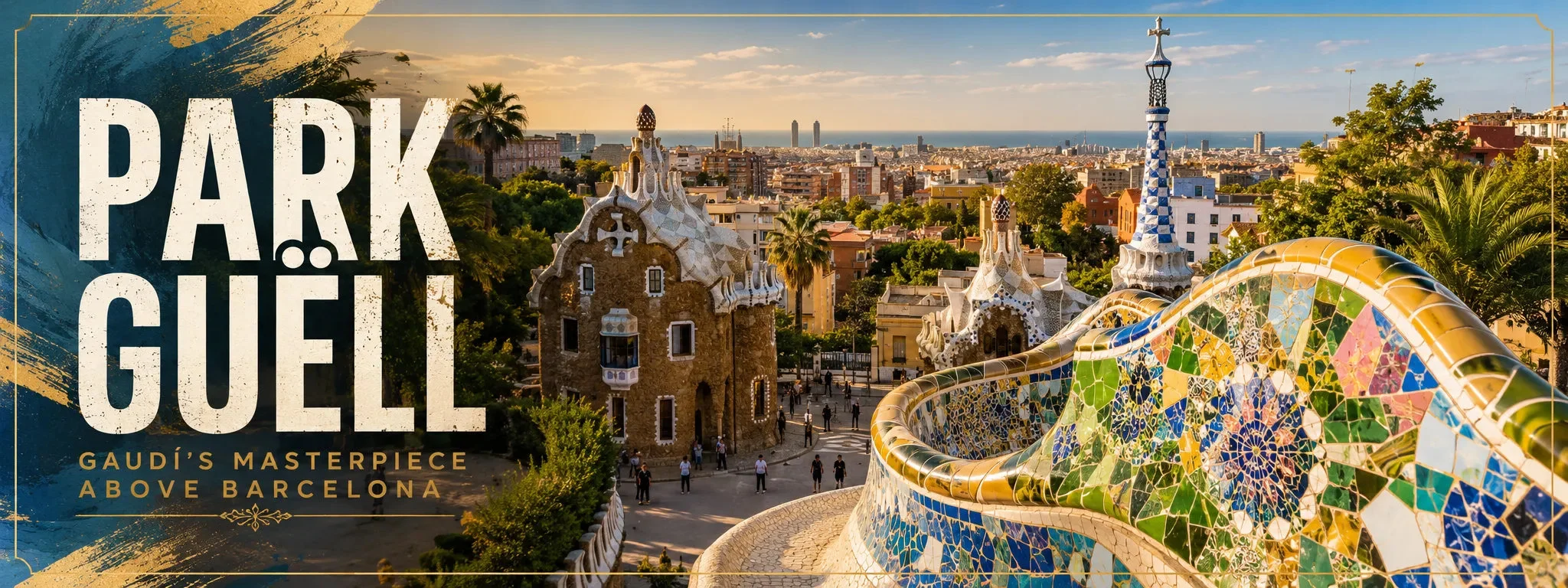
The monumental staircase at the Carrer d'Olot side is the image most people recognise: split flights of steps, fountains and the colourful mosaic salamander often called “the dragon”. It is also one of the busiest pinch points, so do not judge the whole park by the crowd you meet here.
Hypostyle Room
Originally conceived as part of the services for the planned residential development, the forest of columns supports the great terrace above. Look up as well as across: the ceiling details and structural logic make more sense when you remember that Gaudí was designing an integrated urban environment, not a freestanding sculpture garden.
Nature Square and the serpentine bench
The broad terrace gives the classic city view framed by the curving trencadís bench. Morning light, haze and crowd levels vary, but the better strategy is simply to give yourself time. Walk the full curve rather than queuing for one “perfect” seat.
Viaducts and quieter paths
Gaudí's stone viaducts and covered paths are often the part visitors remember most once they escape the central cluster. Their columns lean, branch and merge into the hillside, making movement through the park feel deliberately organic. These areas also reveal why Park Güell works better as a landscape than as a checklist of monuments.
A sensible first-visit route
If mobility is not an issue, choose your entrance based on how you are arriving rather than trying to force a single “correct” route. One practical sequence is to enter from the Carretera del Carmel side, work gradually through the higher landscape, descend via viaducts toward Nature Square and the Hypostyle Room, then finish at the Dragon Stairway. That puts more downhill than uphill into the visit.
If you arrive from Lesseps or Vallcarca, the official park directions estimate roughly 20 minutes of walking from either L3 station and point visitors toward escalator-assisted approaches. From H6 or D40 bus stops on Travessera de Dalt, the walk is closer to 10 minutes. Always check the official “How to get there” page on the day because escalators, street works and entrance arrangements can change.
Accessibility: plan the route before you arrive
Park Güell is unusually candid about its accessibility limitations. The official site warns that stairs, slopes and uneven terrain can make a complete visit difficult for people with reduced mobility. It recommends the Carretera del Carmel entrance and publishes two easier routes: an architectural route of about 50 minutes and another accessible route through the viaduct area of about 20 minutes.
Wheelchairs can be reserved in advance, and accessible parking spaces are available for accredited vehicles near the Carretera del Carmel entrance. The park also recommends downloading its app, which maps more accessible sections. If step-free access is essential, build the visit around this official route rather than adapting a generic walking itinerary after arrival.
Best time to visit
There is no single magic hour that makes Park Güell empty. Early ticketed slots generally give you cooler temperatures and a less compressed start; later visits can offer softer light but may coincide with a full day of visitor build-up. In summer, heat and exposed walking matter more than photographers sometimes admit. In wet weather, stone and mosaic surfaces can be slippery.
Because the park has no artificial lighting and adjusts schedules around daylight, use the live ticket calendar rather than a static annual timetable. If city views are important, weather visibility matters too: a clear ordinary afternoon can be more rewarding than a fashionable sunset slot under haze.
Getting there without wasting half the morning
The biggest mistake is assuming the metro drops you at the gate. It does not. L3 stations Lesseps and Vallcarca require an uphill walk. H6 and D40 buses can reduce the climb, and taxis are a practical option for travellers with limited time or mobility. The park has a taxi rank near Carretera del Carmel.
Private cars are usually more trouble than they are worth in this dense residential area. If you do drive, use the official parking guidance rather than circling neighbourhood streets. For general Barcelona transit strategy, see our getting around Barcelona guide.
Crowds, photography and visitor etiquette
Park Güell is a protected heritage site surrounded by residential neighbourhoods. Keep moving at narrow viewpoints, do not block stairways for long photo sessions, and follow staff instructions around restoration work. The official regulations also limit commercial or organised filming and photography; ordinary personal photos are one thing, a styled shoot or professional production is another.
Remember that residents have their own access rights and that the park is not an isolated attraction zone. Keep noise down on approach streets, use public transport where practical and do not treat doorways or private terraces near the entrances as waiting areas.
Families and children
Children usually enjoy the colour, tunnels, columns and open-air nature of the park more than a conventional museum, but prams and tired legs can turn the slopes into work. Under-14s must be accompanied by an adult under the park's access rules. Bring water, sun protection and a realistic route; do not promise a small child that “the metro is right there” at the end.
What to combine with Park Güell
Park Güell pairs naturally with Gràcia because the neighbourhood lies downhill and has plenty of cafés and squares for a slower second half of the day. Read our Gràcia guide if you want to walk onward rather than return immediately to the centre. Combining Park Güell with Sagrada Família is also possible, but leave enough transfer time between timed tickets; rushing from one Gaudí site to the next is exactly how a good day becomes stressful.
For architectural context before or after the visit, our Gaudí and Modernisme guide explains how Park Güell fits into the wider movement, while the Sagrada Família guide handles the city's other major Gaudí booking problem.
Common Park Güell mistakes
- Relying on old “free zone” advice: use current official access rules, not pre-regulation blog posts.
- Buying too late: online advance booking is the official recommendation and immediate entry is not guaranteed.
- Underestimating the hill: the metro-to-gate walk can be the hardest part of the visit.
- Choosing an entrance without considering mobility: Carretera del Carmel is the park's recommended accessible approach.
- Only seeing the dragon: the viaducts, landscape and terrace are essential to understanding the site.
- Overbooking the day: allow travel and walking time around any second timed attraction.
Check the official ticket time, choose your entrance based on how you are arriving, and look at the accessibility route if anyone in your group has limited mobility. Carry water and sun protection in warm weather, but travel light enough for stairs and crowded paths. Download or screenshot your QR ticket before leaving reliable Wi-Fi. Finally, leave a realistic buffer between Park Güell and any later timed booking: the transfer begins at the exit gate, not at the nearest metro station. These small decisions remove most of the avoidable stress from a visit.
Before you go: a five-point check
Official sources checked
- Park Güell — prices and opening times, checked 30 August 2026.
- Park Güell — how to get there, for current metro, bus and taxi approaches.
- Park Güell — accessibility, for recommended entrances, routes and mobility support.
- Park Güell — access regulations, for timed entry and capacity rules.
- Park Güell — FAQs, for booking and entry guidance.