
Why Sarrià feels different
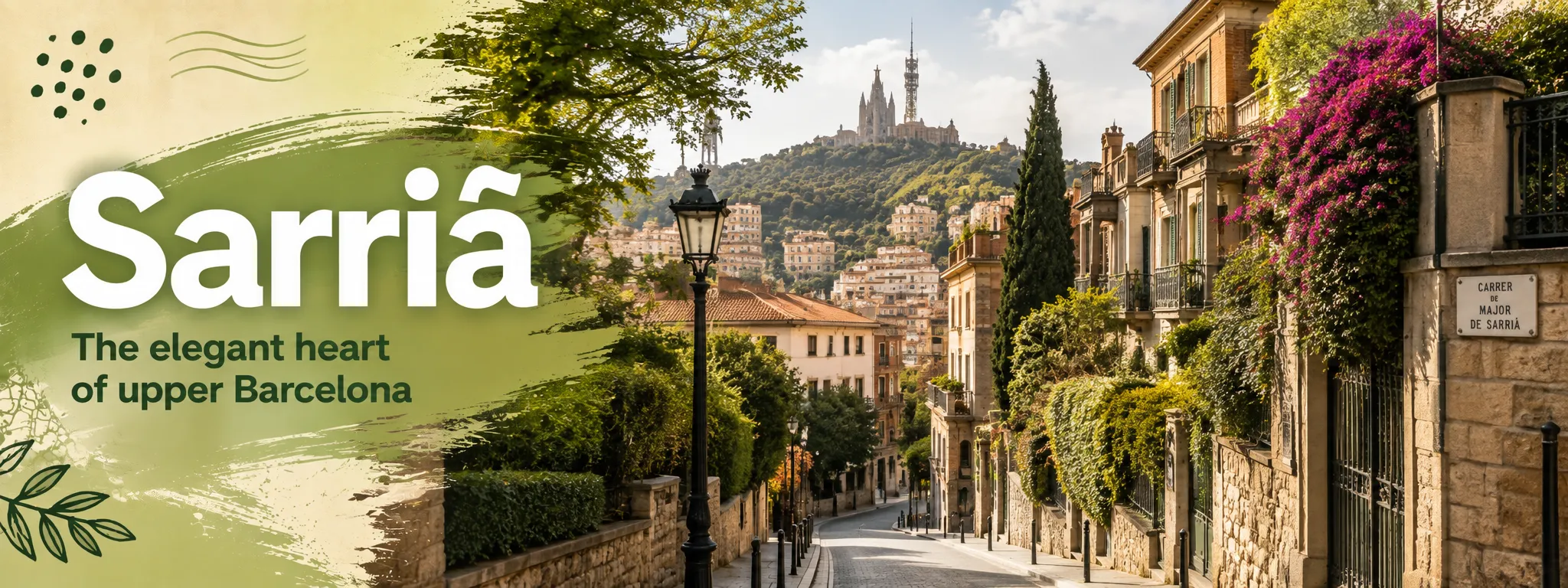
Sarrià is the Barcelona neighbourhood for travellers who want the city without feeling as though every street is part of the sightseeing circuit. The old village was absorbed into Barcelona in the early 20th century, but around Carrer Major de Sarrià and Plaça de Sarrià the scale still feels compact: low-rise streets, small shops, bakeries, schools and residents doing ordinary errands. The broader Sarrià–Sant Gervasi district climbs toward Collserola and includes some of the city's wealthiest residential streets, so it is calmer and greener than the centre but also less convenient for travellers who want to walk everywhere.
Walk the old village core
Start around Plaça de Sarrià, then wander Carrer Major de Sarrià and the lanes around Casa Orlandai. The pleasure is in the neighbourhood texture rather than a single attraction: traditional food shops, modest squares and a street pattern that makes more sense on foot than on a rigid itinerary. Barcelona City Council continues to programme community activities around Sarrià, a useful reminder that this is still a lived-in neighbourhood rather than a preserved tourist set.
Eat like you are in a neighbourhood, not an attraction zone
Sarrià is a good place to stop for breakfast, vermut, lunch or an early evening drink without building the meal around a famous address. Bar Tomàs remains the name most visitors know for patatas bravas, but the better strategy is to walk a few blocks and choose by atmosphere, menu and local turnover. Prices in the wider district can run higher than in less affluent parts of Barcelona, so check menus before sitting down rather than assuming “local” automatically means cheap.
Families, museums and green space
For families, the district works because there is space to slow down. CosmoCaixa sits in the wider Sarrià–Sant Gervasi area and is one of Barcelona's strongest wet-weather or hot-afternoon options for children. Turó Park and smaller neighbourhood green spaces add easy downtime, while the Collserola edge opens the possibility of longer walks if you deliberately plan for hills, heat and daylight. Treat Collserola as a separate outing rather than an accidental extension of a city stroll.
Should you stay in Sarrià?
Stay here if sleep quality, residential streets and returning to somewhere calm matter more than nightlife on the doorstep. It can suit families, repeat visitors, business travellers working in the upper city and anyone comfortable using public transport every day. First-time visitors with a short trip may prefer Eixample, Gràcia or the old-city edge because more major sights are reachable on foot.
- Good fit: quieter evenings, families, longer stays, repeat visitors.
- Less ideal: late-night bar hopping, beach-first trips, or travellers who dislike hills and daily transit.
Getting there and moving around
FGC urban services are the most useful way into the Sarrià core from central Barcelona; buses fill the gaps as the streets rise toward the hills. Do not assume every route that looks short on a map is flat. If mobility is a concern, check the exact station exit and final street gradient before booking accommodation. Taxis can be useful for the final uphill leg, especially with luggage or small children.
How to combine Sarrià with the rest of Barcelona
A sensible half-day is Sarrià village plus one nearby museum or park, followed by a direct return toward Gràcia/Eixample. Avoid trying to bolt it onto a packed old-city day: the reason to visit is the change of pace. If you are exploring neighbourhood character, compare it with Gràcia — both retain village identity, but Gràcia is denser, busier and much more visitor-facing.
Quick decisions
- Come for: neighbourhood atmosphere, food stops, family pace and greener streets.
- Allow: two to four hours for the village; longer if adding CosmoCaixa or Collserola.
- Wear: comfortable shoes; hills matter more as you move north.
- Check live: museum access, public transport changes and weather before setting out.