
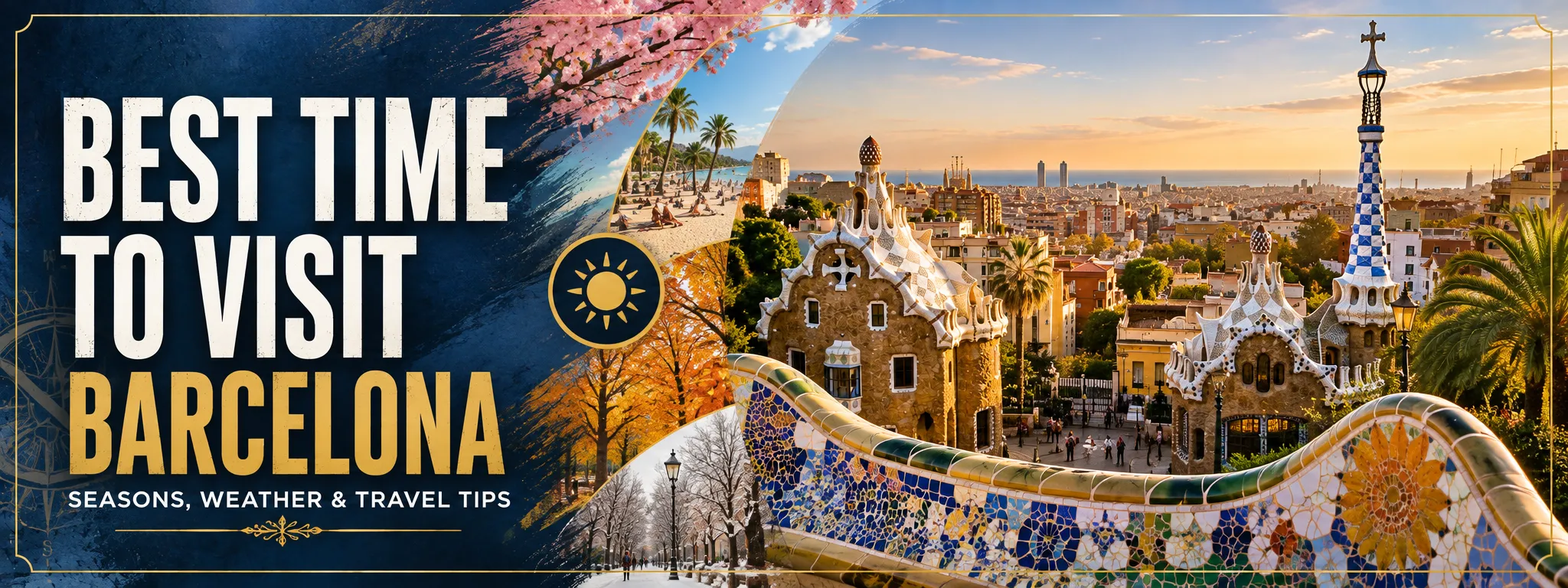
The quick answer: when should you go?
If you want one recommendation, aim for late April through May or mid-September through October. Barcelona is warm enough for long days outside, the city is fully alive, and you avoid the most intense combination of summer heat and peak visitor pressure. May is especially good for walkers and architecture-heavy trips; September is better if swimming matters, although early autumn is also one of Barcelona's wetter periods.
There is no universally "best" month, because Barcelona changes character by season. Beach-focused travellers may happily accept July crowds. Museum and food travellers can save money and time in January or February. Festival lovers may deliberately choose late September for La Mercè. The useful question is not simply "when is the weather best?" but which trade-offs fit your trip?
What Barcelona's climate actually looks like
Barcelona has a Mediterranean climate: relatively mild winters, hot summers, plenty of sunshine and rainfall that is uneven rather than constant. The city's coastal position moderates winter cold but also adds humidity in summer. AEMET's 1981–2010 normals for Barcelona Airport put the annual mean temperature at 16.1°C, with average daily highs rising from 13.6°C in January to 28.5°C in August.
Rain is not distributed the way many first-time visitors expect. July is very dry on average, while late summer and autumn can bring heavier episodes. AEMET records average monthly rainfall around 21 mm in July, 62 mm in August, 81 mm in September and 91 mm in October. That does not mean October is a washout; it means you should plan for variability and keep one indoor alternative for any autumn day.
Use climate averages for choosing a season, then check the current AEMET forecast and warnings close to travel. Heatwaves, thunderstorms and unusually warm winter spells can all sit well outside a monthly average.
Spring: March to May
March is a transition month. AEMET's airport normal is about 16.1°C for the average daily high, with cool mornings and evenings. It is good for museums, markets and neighbourhood walking, but not dependable beach weather. Pack a light layer and something rainproof.
April is one of the city's most interesting cultural months. Days lengthen, average highs reach about 18°C, and the city is comfortable for walking from the Gothic Quarter to Eixample without structuring your day around heat. Sant Jordi on 23 April is one of Catalonia's most distinctive public celebrations, with books and roses taking over streets and squares. It is a brilliant day to be in Barcelona, but central areas are much busier than a normal April weekday.
May is our best all-round pick for many first-time visitors. Average daily highs are around 21°C, daylight is generous, outdoor dining feels natural and the big summer surge has not fully arrived. The sea may still feel cool to people expecting midsummer water, but beach time is realistic on warm afternoons.
Summer: June to August
June gives you long evenings and a better balance than July or August. AEMET's airport normal for the daily high is about 24.9°C, although hot spells can run well above that. The night of 23 June, Sant Joan, is a major midsummer celebration with fireworks, neighbourhood events and heavy activity around the beaches. Barcelona City Council treats it as a citywide festive night, so choose those dates intentionally rather than being surprised by noise and crowds.
July is the driest and sunniest-feeling part of the year, with average daily highs around 28°C and warm nights. It works well for travellers who want beach mornings, late dinners and nightlife. It is less forgiving for a schedule built around six hours of exposed sightseeing. Reserve major timed-entry attractions early and move your longest walks to morning or evening.
August is the hottest month in AEMET's airport normals, with an average daily high of 28.5°C and an average minimum around 20.2°C. Humidity and warm nights can matter more than the headline maximum. Visitor demand remains high, especially around Gaudí attractions and the waterfront. Some small independent businesses may close or shorten hours for local holidays, so do not build a trip around one restaurant without checking current opening information.
Autumn: September to November
September is excellent for travellers who want both city sightseeing and the sea. The average daily high at Barcelona Airport is about 26°C, while nights are noticeably easier than in August. The trade-off is rain risk: September is one of the wetter months in AEMET's long-term data. Keep a museum, market or Modernisme interior as a flexible backup.
Late September also brings La Mercè, Barcelona's major annual city festival. Barcelona City Council's recent programmes show how the event spreads music, street arts, popular culture, castellers and fire traditions across multiple districts. It is an outstanding time to see the city behaving like itself rather than performing only for visitors, but accommodation demand, road closures and packed public spaces can change normal trip logistics.
October is cooler, greener and often easier for serious sightseeing, with an average daily high around 22.1°C. It is also the wettest month in the airport climate normals at roughly 91 mm average rainfall, so the ideal October trip is flexible rather than weather-dependent. November is quieter again, with average highs around 17.3°C and a more local feel.
Winter: December to February
Winter is the best-value period for travellers whose priorities are architecture, museums, food and neighbourhood life rather than swimming. Average daily highs at Barcelona Airport are around 14.3°C in December and February and 13.6°C in January. Frost in the city is unusual, but damp air and shade can make evenings feel colder than the number suggests.
The advantages are significant: shorter queues at many attractions, easier restaurant reservations and generally softer accommodation demand outside holiday peaks and major trade events. You can walk Eixample or the old city without planning around midday heat. The disadvantages are shorter daylight, less beach infrastructure and the possibility that a wet or windy day feels distinctly wintry.
Christmas and New Year are exceptions to the quiet-season rule, as are major conventions. Always check your exact dates before assuming a winter week will be cheap.
Barcelona month by month
- January: quiet, cool and good value; strongest for museums, food and architecture.
- February: similar to January, with slightly longer days; convention dates can push hotel rates sharply.
- March: spring begins but evenings remain cool; strong walking month.
- April: comfortable sightseeing weather and Sant Jordi on 23 April; bring a rain layer.
- May: one of the best overall months for first-time visitors, with warm days and long evenings.
- June: long daylight, beach-friendly weather and Sant Joan on 23 June; busier but usually easier than peak summer.
- July: hot, dry and crowded; best if beach and nightlife outweigh midday sightseeing comfort.
- August: hottest nights, heavy tourist demand and some local holiday closures; excellent for a deliberately slow summer trip.
- September: warm sea, easier evenings, La Mercè late in the month and a higher chance of heavy rain episodes.
- October: excellent walking temperatures but statistically wetter; ideal with flexible indoor/outdoor planning.
- November: quieter, cooler and often good value, with fewer beach-oriented services.
- December: festive atmosphere and mild daytime temperatures, but short daylight and holiday demand around Christmas/New Year.
When are Barcelona's crowds worst?
Barcelona does not have a single crowd switch that turns on in June and off in September. The Sagrada Família, Park Güell, La Rambla and the Gothic Quarter can feel busy throughout the year. What changes is how much pressure exists everywhere else: hotel demand, beach space, restaurants, public transport at visitor-heavy stops and the amount of flexibility you have if a timed attraction sells out.
July and August are the least forgiving months for spontaneous flagship sightseeing. Easter periods, long weekends and major festivals can also produce local peaks. If crowd avoidance is your main objective, January, February and November are the easiest months; late April, May and October are better compromises if you still want warmer weather.
Best time for Barcelona's beaches
For a trip where swimming is a priority, think broadly from June through September, with July and August giving the warmest, most reliably summery experience. May can produce beautiful beach days but the water remains cool for some swimmers. October can still deliver warm afternoons, but it is less dependable and autumn storms can affect sea conditions.
Beach conditions are not just about air temperature. Wind, waves, jellyfish, water quality and lifeguard/service periods can change the experience. Check current flags and local beach information rather than assuming a sunny forecast means safe swimming.
Festivals and events that can change your trip
Barcelona's cultural calendar is a reason to visit, not merely a crowd problem. The key is to know when the city will operate differently.
- Sant Jordi — 23 April: books and roses fill central streets; wonderful atmosphere, much heavier pedestrian traffic.
- Sant Joan — night of 23 June: midsummer fireworks and celebrations, especially around beaches and neighbourhood squares. Expect noise and late-night activity.
- Festa Major de Gràcia — August: decorated streets, concerts and community events make Gràcia a destination in itself and significantly busier than normal.
- La Mercè — around 24 September: the city's major annual festival, with large-scale cultural programming, street events and transport/road impacts across multiple districts.
Exact programmes and dates beyond the traditional anchor day can change each year. Use the Barcelona City Council cultural calendar when your trip overlaps a major festival.
Best months for families
Families who plan to walk a lot usually do best in April, May, late September and October. You get usable daylight without the hardest summer heat, and children are less likely to spend the afternoon exhausted between attractions. If the beach is central to the trip, June is a strong compromise: summer rhythms have arrived, but the city is generally easier than in late July or August.
School-holiday calendars from your home country still matter. A theoretically perfect May week is less useful if it creates impossible travel dates, and an August trip can work very well if you deliberately slow the itinerary and prioritise mornings, pools and beaches.
Best time for lower prices
Accommodation is normally easiest to find at lower rates in the colder off-season, especially parts of January, February and November. But Barcelona is a major business and convention city, so event demand can overwhelm the normal seasonal pattern for particular dates. Search your actual dates before relying on a generic "winter is cheap" rule.
If you want value without winter weather, look at late October or parts of March. May and September are attractive precisely because everyone knows they are attractive; they are not guaranteed bargain months.
What to do about rain and heat
The right approach is flexibility, not trying to choose a month with zero weather risk. In autumn, keep one or two indoor-heavy options unbooked until the short-range forecast firms up: museums, markets, Modernisme interiors or a long lunch. In summer, reverse the logic: lock in outdoor walks early, put interiors in the hot afternoon, then return outside for the evening.
For any season, check AEMET warnings close to the day. Barcelona can experience heat alerts, intense rainfall and thunderstorms that matter far more than a monthly average.
Best timing by trip style
- First Barcelona trip: May or late September to early October.
- Beach-first holiday: late June to early September.
- Architecture and walking: April, May, October or November.
- Lowest-crowd city break: January, February or November.
- Festival trip: 23 April for Sant Jordi or late September for La Mercè.
- Heat-sensitive traveller: avoid July and August unless you are happy to structure the day around mornings and evenings.
- Family trip: May, June or late September, depending on school dates and beach priorities.
How far ahead should you book?
For peak summer, Easter periods and major festival dates, secure accommodation and must-do timed attractions as soon as your dates are firm. The key is not to book every hour of every day; it is to lock the attractions that genuinely sell out and leave the rest of the itinerary flexible around weather and energy.
In winter and quieter shoulder periods, you usually have more room to improvise, but Sagrada Família and other flagship attractions can still sell popular slots. Seasonal quiet does not make Barcelona empty.
Sources and useful planning links
- AEMET — Barcelona Airport climate normals for long-term temperature, rainfall and humidity context.
- AEMET for current forecasts and weather warnings before and during the trip.
- Barcelona City Council — La Mercè for the current annual festival programme when published.
- Barcelona City Council for current city events and public-space information.
Related guides
Once you have dates, use our Barcelona transport guide to understand metro and airport-ticket rules, the Barcelona beaches guide if swimming matters, and the Sagrada Família guide for the timed-entry attraction most worth booking early.