
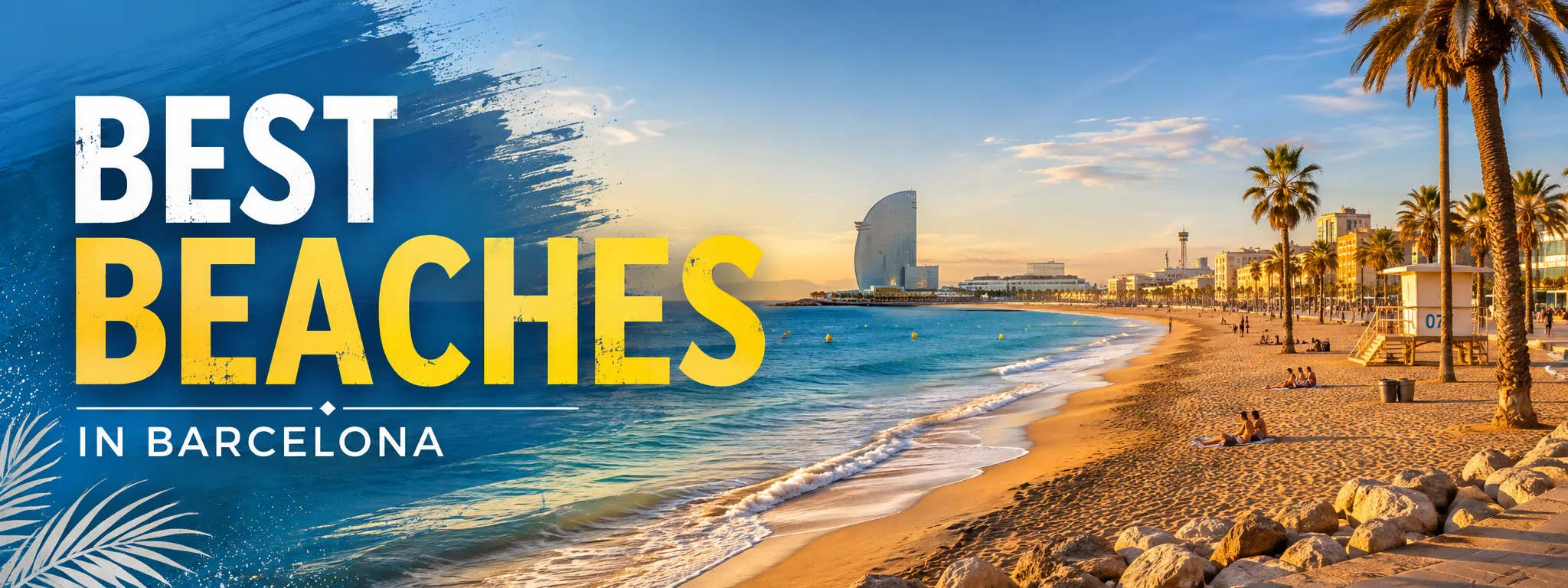
Start with the right expectation: Barcelona is a city with beaches, not a beach resort
Barcelona's waterfront is one of the city's great advantages, but it makes more sense when you treat it as part of a city day rather than expecting a secluded Mediterranean cove. The urban beaches are broad, public, well connected and easy to combine with sightseeing, lunch or an evening in Poblenou or Barceloneta. They can also be busy, exposed to sun and wind, and much more energetic than the postcard beaches found elsewhere on the Catalan coast.
For most first-time visitors, the useful question is not “which beach is best?” but “which beach fits the day I am already having?” Barceloneta wins for convenience; Nova Icària for families and facilities; Bogatell for a more spacious city-beach feel; Mar Bella for a younger, more local atmosphere. If a quiet beach is the main purpose of the day, consider leaving the city rather than travelling from one Barcelona beach to another searching for solitude.
Quick beach chooser
- Barceloneta: easiest to combine with the old city, seafood, Port Vell and a short swim.
- Nova Icària: a practical family choice with extensive facilities and easy Port Olímpic access.
- Bogatell: a strong all-rounder when you want more room and a less intense atmosphere than Barceloneta.
- Mar Bella: a livelier, more local-feeling stretch associated with sport and a younger crowd.
- Castelldefels or Sitges: better when you want the beach to be the main event rather than a two-hour city break.
Barceloneta: unbeatable location, maximum intensity
Barceloneta is the beach most visitors can reach without reorganising their day. It sits beside the old fishing neighbourhood and close to Port Vell, so it works naturally after the Gothic Quarter, Born or waterfront attractions. Barcelona Tourism describes it as one of the city's oldest and best-loved beaches, with lifeguard and safety services in season, adapted showers and toilets, restaurants, bicycle facilities and Wi-Fi.
The trade-off is obvious: convenience attracts people. On hot summer weekends it can feel more like a public square with sand than a retreat. That is not necessarily a negative — it is excellent for people-watching and a spontaneous swim — but travellers seeking a slow, quiet day often enjoy it more early in the morning or outside peak summer afternoons.
Keep valuables management simple. Bring only what you need, do not leave a phone or wallet unattended while everyone in your group swims, and avoid making a beach bag your luggage-storage solution on arrival or departure day.
Nova Icària: the easiest family and facilities choice
Nova Icària sits by Port Olímpic and is one of the most useful beaches for families or mixed groups. Barcelona Tourism specifically describes it as peaceful and popular with families and friends, and lists children's play space, adapted facilities, restaurants, sports and a municipal sailing centre among its services. That combination matters more than a tiny difference in sand quality when you are managing children, mobility needs or a group that wants different activities.
It is also a good compromise geographically: far enough from Barceloneta to feel less compressed, but still integrated into the city. If half your group wants to swim and the other half wants lunch, shade, a promenade walk or an early exit, Nova Icària is easier to manage than a remote day trip.
Bogatell: the best all-round city beach for many visitors
Bogatell is the beach we most often recommend when somebody says they want “a nice Barcelona beach” without giving a more specific brief. It was created as part of the Olympic-era transformation that opened the city back to the sea, and it remains closely tied to the Poblenou side of the waterfront. It has sports facilities, bicycle parking, kiosks, adapted toilets and showers, and seasonal safety services.
The main advantage is balance. It is still a city beach — do not expect silence — but the experience is generally less compressed than the most central Barceloneta stretch. It is easy to pair with Rambla del Poblenou for lunch or dinner, giving you a beach day that does not depend on eating at the first seafront venue you see.
Mar Bella and the Poblenou end: better for a more local-feeling beach day
Continue northeast and the waterfront feels progressively less dominated by old-city sightseeing traffic. Mar Bella is well known for sport, a younger crowd and a designated naturist area. That makes it a good choice for travellers who actively prefer a more relaxed, less tourist-centred beach culture, but it is worth knowing the character before arriving with a group that expects a conventional resort beach.
The wider Poblenou waterfront also works well for cycling, walking and combining beach time with neighbourhood cafés. If you are staying in Poblenou or Diagonal Mar, there is little reason to cross the city to Barceloneta purely because it is more famous.
Accessibility: Barcelona's beaches are unusually practical, but assistance is seasonal
Barcelona Tourism states that all city beaches provide basic accessibility measures including accessible routes to the dry beach area, adapted toilets and showers, visual and tactile information, and wooden walkways reaching as close to the water as possible. Public transport to the beach network is also designed around accessible connections.
Some beaches provide a more intensive assisted-bathing service for people with reduced mobility. Current official pages list assisted bathing at locations including Barceloneta, Nova Icària and Bogatell, with accessible changing facilities and specialised equipment. The exact operating beaches, dates and hours are seasonal and can change, so anyone relying on this service should confirm the current Barcelona beach accessibility page before travelling rather than treating an old timetable as permanent.
For wheelchair users who do not intend to enter the water, promenade access is generally easier than the final transition across sand. Heat and lack of shade can still be significant constraints, so an early visit and a clear plan for accessible toilets, transport and return route are worthwhile.
Swimming safety: treat the flag and lifeguard instructions as the decision-maker
The Mediterranean can look calm while local conditions are unsuitable for swimming. Use the beach flag and posted information, and follow lifeguard instructions when the service is operating. A red flag means do not swim. Yellow means increased caution. Conditions can change with wind, swell, storms and water quality, so yesterday's experience is not a safety forecast for today.
Children who are confident pool swimmers can still be caught out by waves, uneven footing and crowded water. Keep them within direct supervision rather than relying on lifeguards as childcare. After heavy rain, check current beach notices because urban runoff can temporarily affect bathing conditions.
When to go: morning beats peak afternoon for most travellers
On a hot day, early morning offers the best combination of space, lower heat and easier transport. Late afternoon can also be pleasant, especially if you are pairing the beach with dinner nearby. The harsh middle of the day is when exposed sand, limited natural shade and strong ultraviolet radiation make a “relaxing” beach stop surprisingly tiring.
Summer is the obvious swimming season, but the waterfront remains useful year-round for walking, running and sea views. Outside the main bathing season, assume fewer beach services and do not assume lifeguards, rental concessions or assisted-bathing facilities are operating merely because the weather feels warm.
Smoke-free beaches and beach etiquette
Barcelona's official tourism pages state that the city's beaches are smoke-free spaces. Treat that as a straightforward rule, not a suggestion. Keep music at a level that does not colonise the sand around you, use bins, and avoid feeding gulls. If you are using a naturist section, respect the relaxed culture and other people's privacy rather than treating it as a spectacle.
The beaches are public urban spaces used by residents as well as visitors. A little awareness — keeping paths clear, not monopolising showers and managing rubbish — makes a noticeable difference in high season.
What to bring — and what not to bring
Useful basics are water, high-SPF sunscreen, a hat, a towel, sandals for hot surfaces and a light layer if you are staying into the evening. A compact beach shade can be useful for families, but remember that carrying bulky equipment through the metro is often more hassle than it is worth for a short swim.
Do not bring passports, large amounts of cash or all of your group's phones if they can safely remain at your accommodation. Barcelona is not uniquely dangerous, but beaches create the perfect opportunity for unattended-bag theft because everybody wants to swim at once.
Beach bars, food and the “seafront premium”
You do not need to eat directly on the sand to have a good beach day. Barceloneta has a dense restaurant scene, while Poblenou gives you many options a few blocks inland. Moving even a short distance away from the immediate promenade usually gives you a broader choice and a calmer meal.
Seasonal kiosks and rentals can be convenient, but do not plan around a specific concession months in advance. Operating seasons and contracts change. If a particular restaurant, chiringuito or rental service matters, verify it directly on the day.
Getting there without overthinking it
Barcelona's beach line is served by a mix of metro, bus, tram and walking connections. The best route depends on the exact beach, and a ten-minute walk can be preferable to changing lines for a marginally closer stop. For Barceloneta, the L4 metro station of the same name is useful but is not directly on the sand. For the Olympic and Poblenou beaches, use current TMB journey planning rather than memorising one route from an old blog.
If you are cycling, the waterfront is attractive but busy. Use designated cycling space where provided, slow down around pedestrians and do not assume the promenade is an unrestricted cycle lane.
Should you leave Barcelona for a “real” beach day?
Yes, if the beach itself is a major holiday priority. Castelldefels offers a long, open stretch of sand south of the city. Sitges combines multiple beaches with a handsome old centre, restaurants and a destination worth spending the day in. Both can make more sense than repeatedly changing Barcelona city beaches in search of resort conditions.
The decision is about opportunity cost. On a three-day Barcelona visit, giving half a day to an urban beach is easy; giving a full day to a coastal excursion means giving up a major city day. On a week-long stay in summer, the day trip becomes much easier to justify.
Three easy ways to build the beach into an itinerary
Old city + Barceloneta
Spend the morning in the Gothic Quarter or Born, eat lunch away from the busiest waterfront strip, then walk to Barceloneta for a swim in the late afternoon. This is the best low-commitment option.
Poblenou + Bogatell
Head to Bogatell in the morning, leave before the strongest afternoon heat, then explore Rambla del Poblenou and the neighbourhood for lunch. This gives the beach more space without sacrificing a city experience.
Montjuïc or museums + sunset waterfront
Use the hottest part of the day indoors, then come to the waterfront when the light and temperature soften. This is especially sensible for travellers who want sea atmosphere more than hours of sunbathing.
Official sources and related guides
For changing beach-service, accessibility and safety information, use the current Barcelona Tourism beach pages and Barcelona municipal beach notices. We checked current official pages for Barceloneta, Nova Icària and Bogatell on 31 August 2026.